
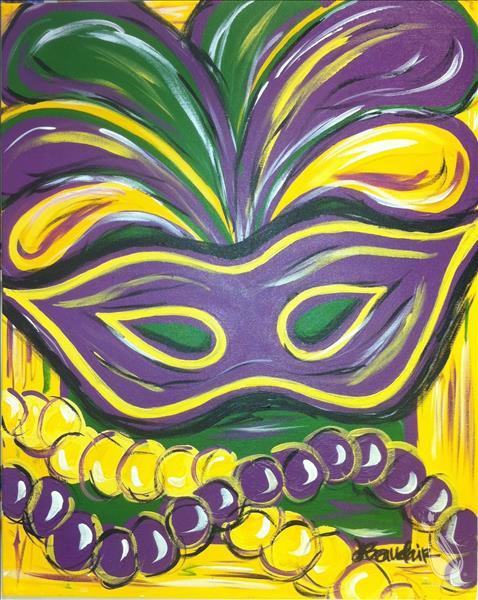
2X TUESDAY - Mardi Gras @ Fridays (Monroeville)
Tuesday, February 21st 7:00 PM - 8:30 PM
When you think Mardi Gras, you likely think parties, parades, and masks in green, gold, and purple. You might have feasted on a colorful sprinkle-topped king cake or know that it comes right before Lent, the season leading up to Easter, but what is the history of Mardi Gras?
Mardi Gras' roots go all the way back to pagan spring festivals thousands of years ago. The day has similarities to the raucous Roman festivals of Saturnalia and Lupercalia. Once Christianity came to Rome, religious leaders tried to blend pagan traditions with Christian traditions for a smoother transition. What resulted was a festival where people drank, feasted, danced, and partied before the abstinent and somber period of Lent began.
Some experts disagree and say that this festivity actually began as a response to the Catholic Church banning sex and meat during Lent. They say this then lead to people partying and indulging as much as they could before Lent started. In this narrative, experts believe that Church leaders encouraged the rumors of pagan roots in an effort to quell the festivities.
Some don't realize that while Mardi Gras is always the Tuesday before Lent, the actual season begins in January. Three Kings’ Day, which falls on January 6, is not only the end of the 12 days of Christmas, but it is also marks the beginning of Carnival.
While the holiday could have pagan Roman roots, it didn’t become known as “Mardi Gras” until it reached France and then spread throughout Europe. In England, it became known as Shrove Tuesday or Pancake Day, which is still popular today. European colonits later brough the huge celebrations to the Americas, and it became Carnival Tuesday in Caribbean nations.
In 1699, Mardi Gras is said to have made its way to North America, thanks to French-Canadian explorer Pierre Le Moyne d’Iberville. He settled down near present-day New Orleans and brought the tradition with him.
Where the first official celebration actually happened is up for constant debate. Both Mobile, Alabama, and New Orleans, Louisiana are said to have hosted the first Mardi Gras. Some say that Alabama holds the title on a technicality - the city was officially founded over a decade before the Big Easy.
Regardless of which city held the event, it’s known that the festivities had become common practice by the 1730s. In 1837, New Orleans hosted its first Mardi Gras parade.
In French, Mardi means “Tuesday” and gras means “fat.” That’s why the day is also referred to as Fat Tuesday. The word originated in France and was what people used to describe the day before Ash Wednesday, when they would binge on rich foods such as meat, eggs, milk, and cheese before Lent began.
- https://www.countryliving.com/life/a30814344/mardi-gras-history/ (slightly edited)